Consent-Log
This section clearly lists the consents of all visitors. Visitors can be uniquely identified by an ID if they request information about their activated dataandprovide their own ID. Without this information, this data remains completely anonymous, as the ID is generated randomly.
Logging is mandatory under Article 7, Paragraph 1 of the GDPR. Of course, this data—like all other data—remains under your control at all times and is completely anonymized.
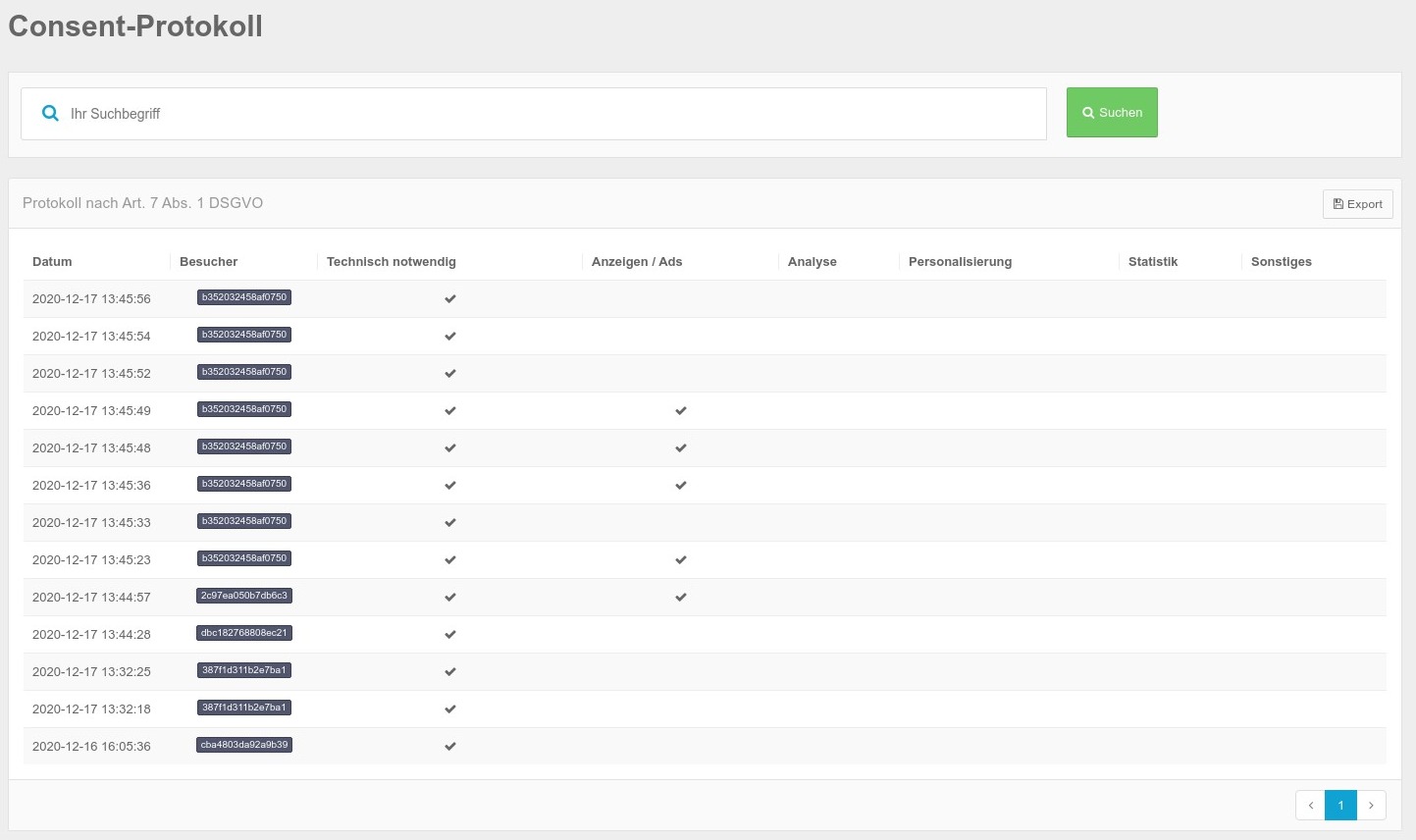
In the overview, you can see how often the respective sections were checked. In the form used in this example, only the “Essential” and “Analysis” sections were offered—which is why checkmarks are only visible there.
Export
By clicking the “Export” button, you can export the consent-data for the respective month in .json format. A sample entry looks like this—you’ll notice the “ucid” here, which your visitors can use to identify themselves.
{
        "consent": true,
        "ucid": "387f1d311b2e7ba1f67722ac08bfdaf56aad3ecab6f11309d0c829f4e255af12",
        "timestamp": 1608208345,
        "purposes": {
            "41ba25c": "Technically necessary"
        },
        "embeddings": {
            "16bd7f0": "Papoo CMS session management"
        },
        "manipulationPrevention": true
    }
Consent Details
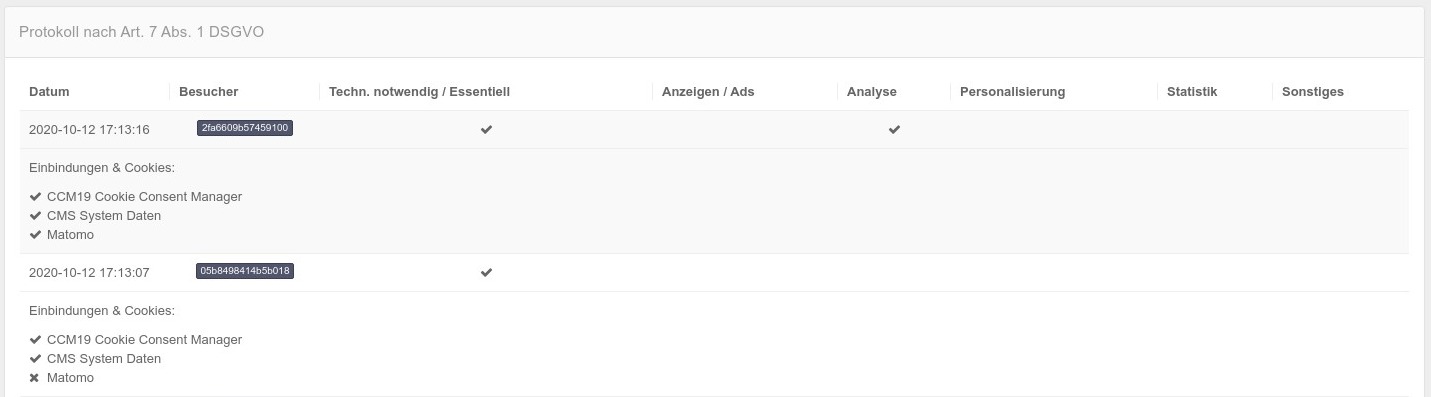
For each entry, consent-details are also stored—specifically, whether individual scripts or embeds were selected within each category.
Using the Consent-Log for Inquiries
If you receive a GDPR-related inquiry asking whether you can provide proof of consent, the inquirer must provide you with their ID. You can then use this ID to search via the search form.
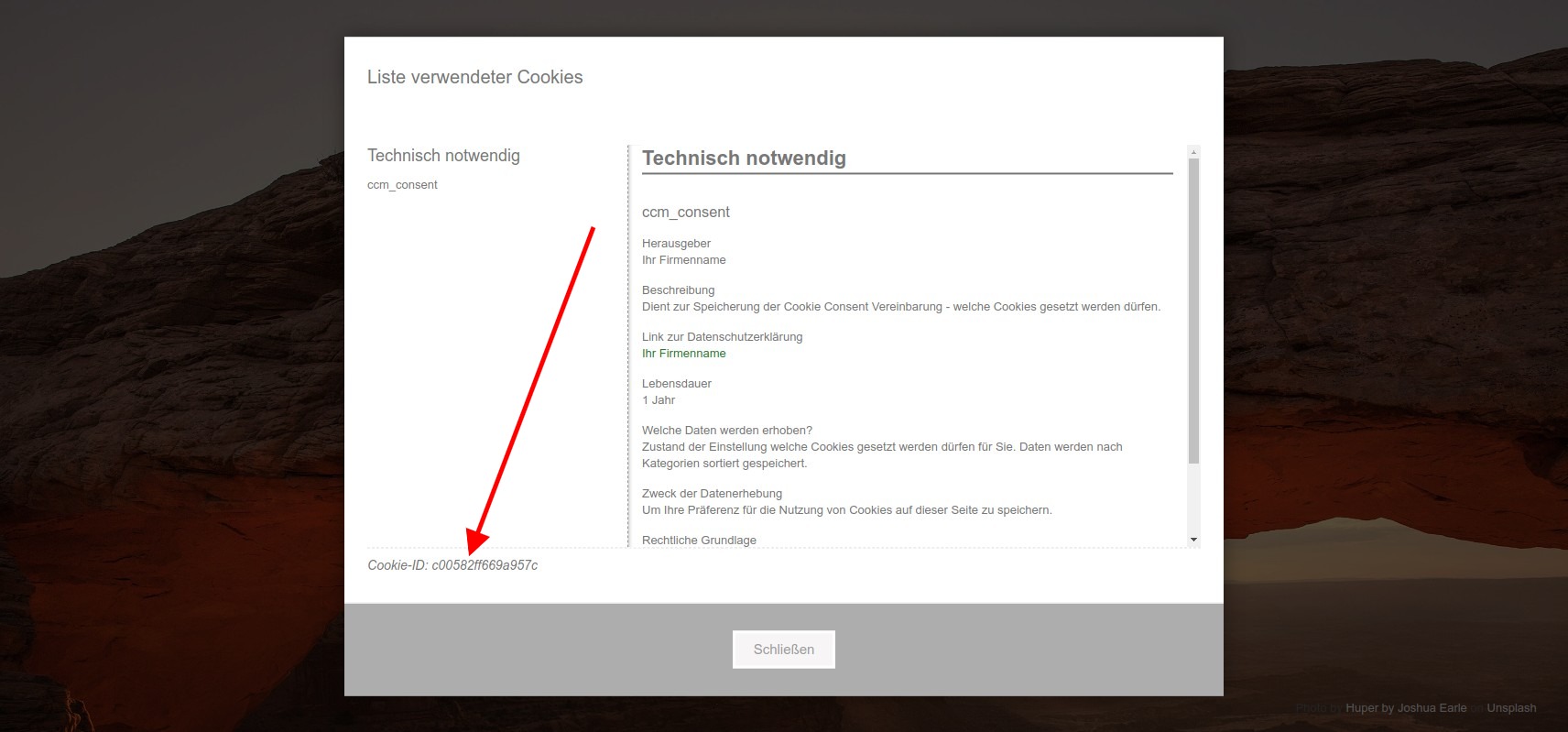
They can find this ID in the Consent-form at the following location. To do this, they must open the Consent-screen, go to Settings (if not already open), and then click the question mark next to one of the categories.
Alternative Way to Retrieve the ID
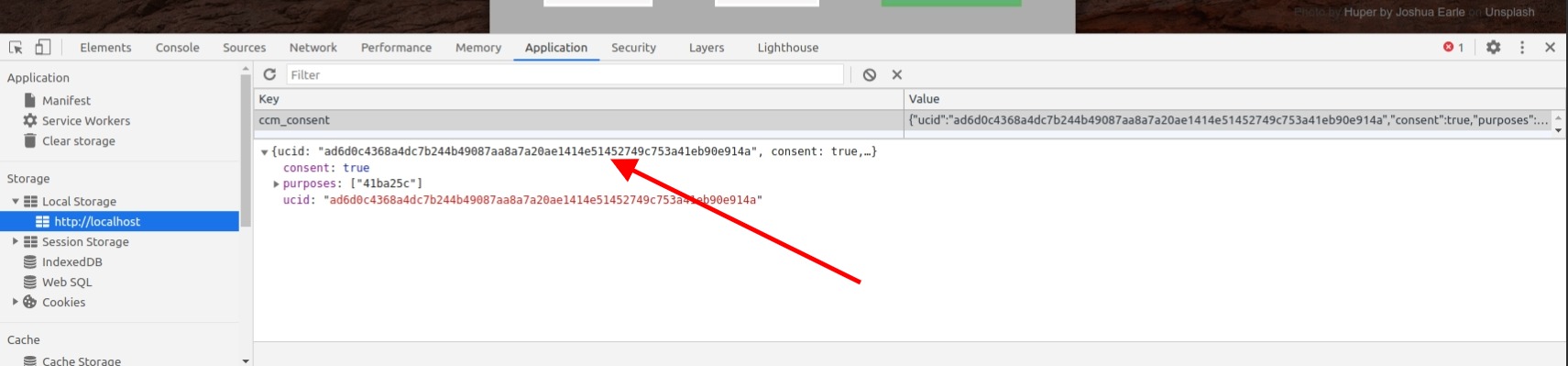
Alternatively, the ID can always be retrieved in the developer tools, as shown in the screenshot. You can find the data under the "Application" tab - > click "Local Storage" on the left, and then select your own domain.
Consent Retention Period
By default, consent is stored for 1 year; therefore, the consent data is also retained for this period. After this year has expired (plus a 1-month grace period), the data is automatically deleted.
You can set this duration individually for each domain in your account under Consent Storage - CCM19 Cookie Consent Manager Documentation.
Archive Log
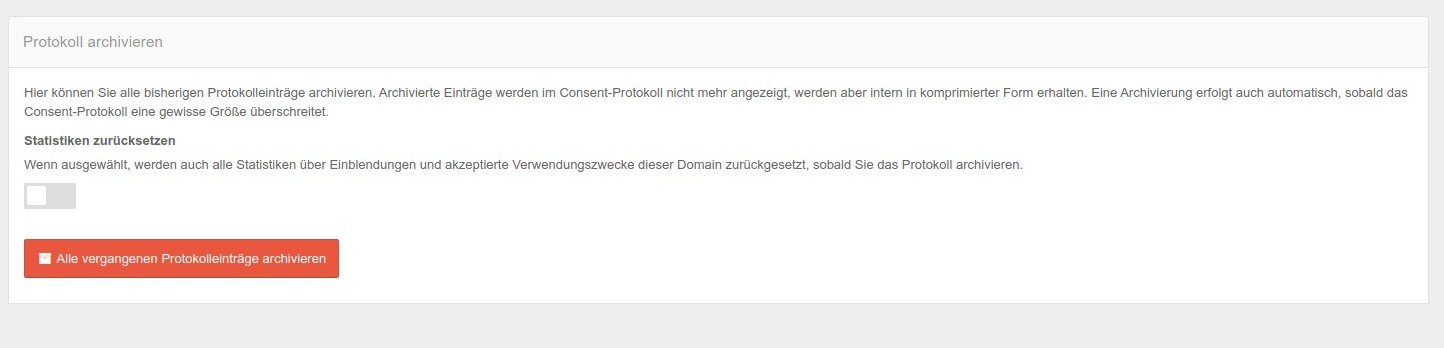
Here you can archive all previous log entries. Archived entries are no longer displayed in the Consent-log, but are retained internally in compressed form. Entries are also archived automatically as soon as the Consent-log exceeds a certain size.
Reset Statistics
If enabled, all statistics regarding impressions and accepted uses for this domain will be reset as soon as you archive the log. The data will therefore be archived from the list shown here.